18650 vs 21700 Cells: Capacity, Size and Cost Trade-Offs
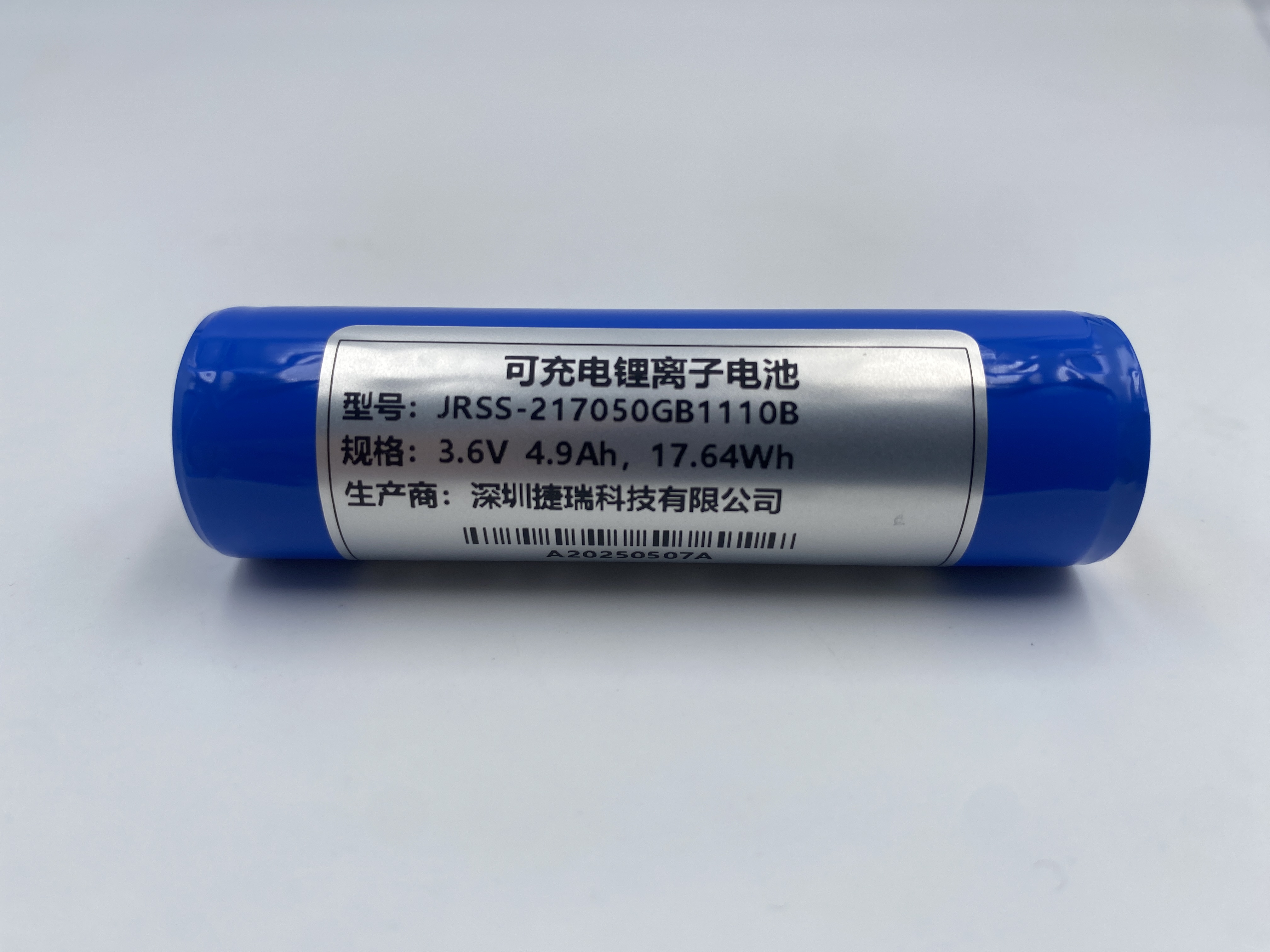
Format Basics: What 18650 and 21700 Mean
The names 18650 and 21700 are dimensional descriptions, not model numbers. In each case the first two digits give the cell diameter in millimetres and the remaining digits give the length. An 18650 cell is therefore an 18mm-diameter, 65mm-long cylinder, and a 21700 cell is a 21mm-diameter, 70mm-long cylinder. Both are round lithium-ion cells with the same nominal voltage behaviour, so the choice between them is rarely about volts. It is about how much energy you need, how much space the pack has, and how many cells you are willing to assemble and manage.
That shared cylindrical architecture matters for pack design. A custom pack built from either format uses the same series and parallel logic: series count sets the pack voltage, parallel count sets capacity, and both are checked against your current profile and the physical space before the specification is written. The difference shows up in the arithmetic behind that logic — how many cells it takes to reach a target energy, and what that does to the enclosure, the weight, and the assembly labour.
If you are comparing formats for a new product, start with the device rather than the cell. The format that fits the enclosure and the current profile is the one worth quoting, and the comparison below explains why the two formats so often land in different applications.
Capacity per Cell: What the Formats Deliver
Capacity is where the format difference becomes concrete: in the same single-cell class, the larger 21700 format carries more capacity than the 18650. The single-cell examples in our range make the gap visible — the 3.6V 3.4Ah 18650 pack and the 3.6V 5.0Ah 21700 pack carry the exact figures for those builds. Treat them as examples of each format rather than an average across it: cell grades vary widely, and a higher-capacity 18650 or a different 21700 will not necessarily match them.
The practical reading is straightforward: one 21700 cell carries more capacity than one 18650 cell. For a pack that needs a given energy, the 21700 route needs fewer cells in parallel to reach it. For a pack that needs a given number of parallel strings for current-sharing reasons, the 21700 route reaches a higher total capacity in the same string count.
That difference also affects how quotes are built. A cell with more capacity per unit is not automatically the cheaper route per watt-hour once assembly, balancing and enclosure volume are counted. The rest of this page works through those trade-offs so you can see where each format wins.
Cell Count and Assembly Implications
Fewer 21700 cells for the same energy changes the assembly, not just the bill of materials. A pack that needs a certain number of parallel cells to hit a capacity target will need fewer 21700 cells than 18650 cells to reach the same figure. Every cell removed is a spot-weld pair removed, a balance connection removed, a cell holder slot removed, and one less unit to test and trace through the build.
For low-voltage packs the effect is modest because the cell count is small either way. For packs with many parallel strings the effect compounds: the assembly becomes shorter, the number of welds and interconnects drops, and the pack's internal wiring is simpler. That can matter when the pack is built in volume, because assembly time and rework risk scale with cell count.
The trade-off is that a 21700 pack has less freedom to shape the cell array. Fewer, larger cells mean the layout is coarser — you cannot fine-tune capacity in small steps the way you can by adding one more 18650 in parallel. Where a design needs a precise capacity point or a narrow current split between strings, the smaller cell gives finer granularity. If your design is already close to a whole number of 21700 cells, that granularity advantage disappears.
Series count is unaffected by format; both cells are used in the same series arrangements to reach a voltage class. What changes is the parallel side of the configuration and, with it, the assembly effort behind it.
Size, Weight and Enclosure Fit
The format names state the dimensions: 18x65mm for the 18650 and 21x70mm for the 21700. A 21700 cell is larger in both diameter and length, so a pack built from 21700 cells needs more room per cell even before the cell count is reduced. Whether that nets out smaller depends on how many cells the design saves.
Diameter is usually the binding constraint. A 21mm cell needs a wider pitch between cell centres, so a cell holder for 21700 cells is wider than one for 18650 cells. In a pack with a tight width or a narrow tube-shaped enclosure, that extra diameter can rule out the larger format regardless of its capacity advantage. Length adds 5mm per cell as well, which matters in flat enclosures where the pack sits close to a wall or a lid.
Weight follows the same logic. The 21700 cell is heavier per unit, but a pack that uses fewer cells may still come out lighter overall, and the balance of cells, holders, wiring and enclosure has to be checked as a whole rather than assumed. For handheld devices and products where the user feels the pack, that check belongs early in the design, not after the enclosure is frozen.
Enclosure fit is therefore a first-pass filter. If the 21700 diameter fits the available width and the pack saves enough cells to offset the larger pitch, the format is viable. If not, the 18650 layout usually wins on fit alone.
Cost Trade-Offs and When Each Format Wins
Per-cell cost and assembly count pull in opposite directions. A 21700 cell generally costs more per unit than an 18650 cell, but a pack that needs fewer cells may cost less to assemble and may carry a lower total cell cost for the same energy. Which effect dominates depends on the capacity target, the volume, and how much of the pack cost sits in labour and hardware rather than cells.
The 18650 format tends to win when the enclosure is narrow, when capacity needs to be tuned in small steps, when the pack is small enough that the cell-count saving is trivial, or when the supply of 18650 cells in the required grade is more dependable for the build. It is also the format that fits existing product designs built around 18mm cell holders, where a change to 21700 would force an enclosure redesign.
The 21700 format tends to win when the pack needs high capacity in a compact footprint, when the diameter constraint is not binding, and when a lower cell count reduces assembly and interconnect work enough to offset the higher per-cell price. In those cases the larger cell delivers more energy per cell and a simpler build.
The decision is settled by quoting both layouts against the same specification. For reference points, our 18650 battery packs and 21700 battery packs pages show how each format is configured, and a single-cell example — the 3.6V 5.0Ah 21700 pack — shows the 21700 capacity figure in a finished configuration. A pack specification that fixes voltage, capacity, current profile and enclosure space can be costed both ways before tooling is committed, which is the point where the format choice stops being a preference and becomes a number.
Tell us about your battery project
Send your device requirements — voltage, capacity, current, space and quantity — and our engineering team will evaluate cell selection, configuration and battery management against them.